Epigenetic Reader Domain
Epigenetic regulators of gene expression and chromatin state include so-called writers, erasers, and readers of chromatin modifications.Well-characterized examples of reader domains include bromodomains typically binding acetyllysine and chromatin organization modifier (chromo), malignant brain tumor (MBT), plant homeodomain (PHD), and Tudor domains generally associating with methyllysine. Research on epigenetic readers has been tremendously influenced by the discovery of selective inhibitors targeting the bromodomain and extraterminal motif (BET) family of acetyl-lysine readers. The human genome encodes 46 proteins containing 61 bromodomains clustered into eight families. Distinct experimental approaches are used to identify the first BET inhibitors, GSK 525762A and (+)-JQ-1.
The Polycomb group (PcG) protein, enhancer of zeste homologue 2 (EZH2), has an essential role in promoting histone H3 lysine 27 trimethylation (H3K27me3) and epigenetic gene silencing. This function of EZH2 is important for cell proliferation and inhibition of cell differentiation, and is implicated in cancer progression. Cyclin-dependent kinases regulate epigenetic gene silencing through phosphorylation of EZH2. In many types of cancers including lymphomas and leukemia, EZH2 is postulated to exert its oncogenic effects via aberrant histone and DNA methylation, causing silencing of tumor suppressor genes.
p300/CBP is not only a transcriptional adaptor but also a histone acetyltransferase.
Epigenetic Reader Domain Isoform Specific Products
-
Epigenetic Reader Domain
(442)
View all products
-
Brd
(3)
View all products
-
BRPF1
(9)
View all products
-
BRPF2
(5)
View all products
-
BRPF3
(2)
View all products
-
BRD2
(61)
View all products
-
BRD3
(57)
View all products
-
BRD4
(285)
View all products
-
BRDT
(26)
View all products
-
CECR2
(4)
View all products
-
BD1
(9)
View all products
-
BD2
(9)
View all products
-
BRD7
(9)
View all products
-
BRD9
(54)
View all products
-
BET
(21)
View all products
-
BAZ
(1)
View all products
All Product Categories
-
Epigenetic Reader Domain Inhibitors
(590)
View all products
-
Epigenetic Reader Domain Agonists
(3)
View all products
-
Epigenetic Reader Domain Antagonists
(2)
View all products
-
Epigenetic Reader Domain Activators
(10)
View all products
-
Epigenetic Reader Domain Modulators
(3)
View all products
-
Epigenetic Reader Domain Chemicals
(2)
View all products
-
Epigenetic Reader Domain Inducer
(1)
View all products
-
Epigenetic Reader Domain Degraders
(157)
View all products
-
Epigenetic Reader Domain Controls
(12)
View all products
-
Epigenetic Reader Domain Substrate
(1)
View all products
-
Epigenetic Reader Domain Ligands
(26)
View all products
-
Epigenetic Reader Domain Related Products (884)
Related Products (884)

-
Antibodies (109)
-
Epigenetic Reader Domain Isoform Comparison
-
GAL-02-221
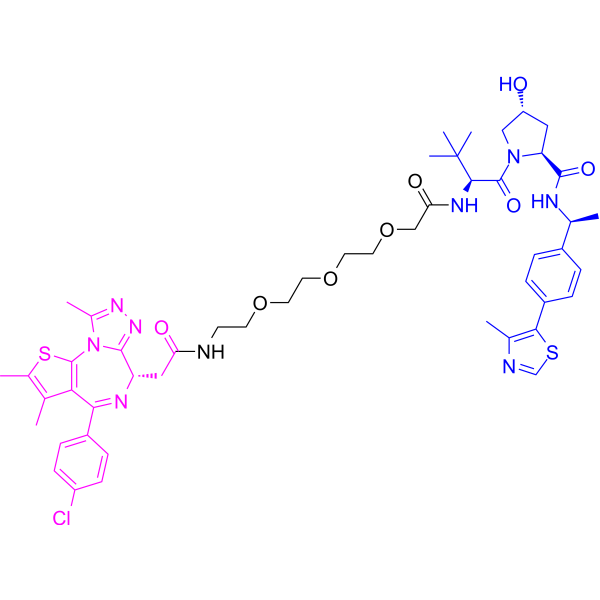 0 ImagesSynonyms: PROTAC BRD4 Degrader-5GAL-02-221 is a BRD4 PROTAC degrader with blood-brain barrier permeability, with a DC50 of 0.009 μM (Jurkat BRD4-HiBiT). GAL-02-221 induces proteasome-catalyzed BRD4 degradation, binds to VHL to trigger BRD4 ubiquitination, and recruits the VHL E3 ligase complex to participate in protein degradation. GAL-02-221 degrades BRD4 in breast cancer cells as well as mouse liver and brain tissues. GAL-02-221 is applicable to research related to breast cancer.
-
CBP/p300-IN-12
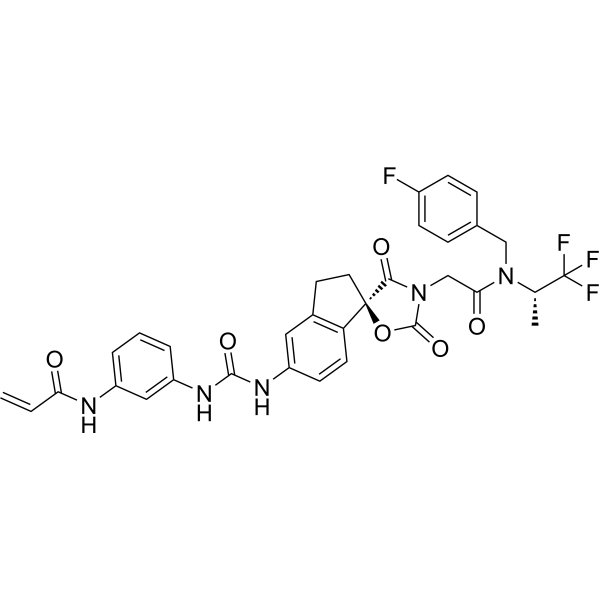 0 ImagesCBP/p300-IN-12 is a potent and selective covalent histone acetyltransferases p300 (IC50 of 166 nM) and CBP inhibitor. CBP/p300-IN-12 decreases the levels of H3K27Ac of PC-3 cells (EC50 of 37 nM). CBP/p300-IN-12 forms a covalent adduct with C1450.
-
BET bromodomain inhibitor 1
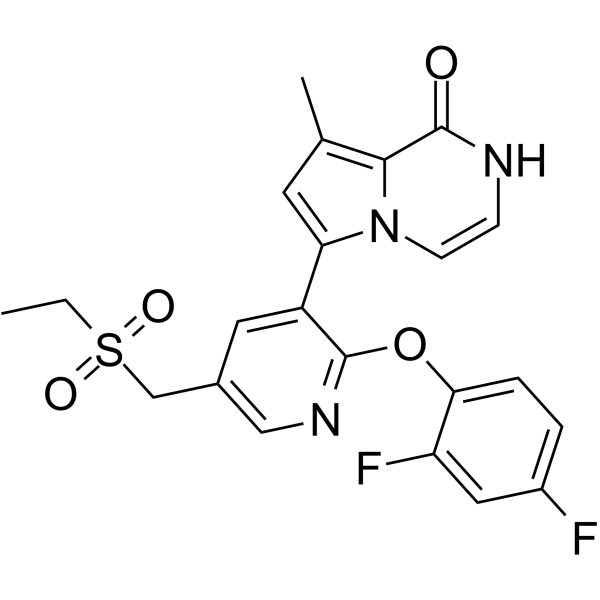 0 ImagesBET bromodomain inhibitor 1 is an orally active, selective bromodomain and extra-terminal (BET) bromodomain inhibitor with an IC50 of 2.6 nM for BRD4. BET bromodomain inhibitor 1 binds to BRD2(2), BRD3(2), BRD4(1), BRD4(2), and BRDT(2) with high affinities (Kd values of 1.3 nM, 1.0 nM, 3.0 nM, 1.6 nM, 2.1 nM, respectively). bromodomain inhibitor 1 has anti-cancer activity.
-
DLG-41
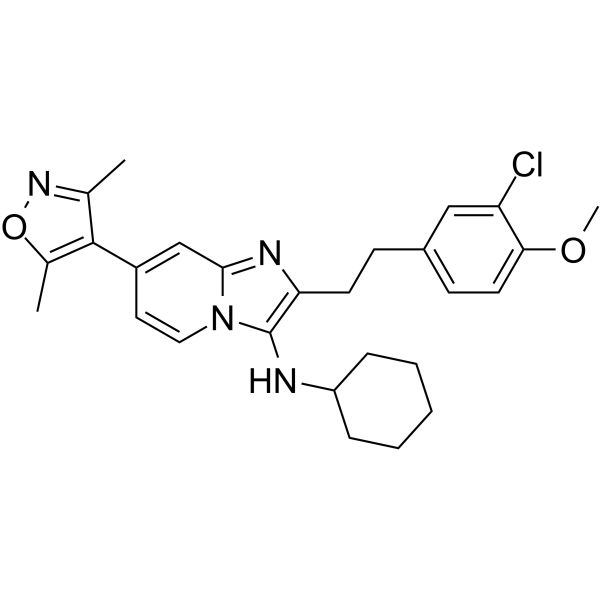
 0 ImagesCat. No.: HY-180183Purity: 98.06%DLG-41 is a GAS41 YEATS domain inhibitor (IC50: 600 nM in AlphaLISA). DLG-41 potently disrupts the association of GAS41 YEATS with chromatin in cells. DLG-41 strongly enhances levels of CDKN1A. DLG-41 has anticancer activity against NSCLC.
-
GNE-375
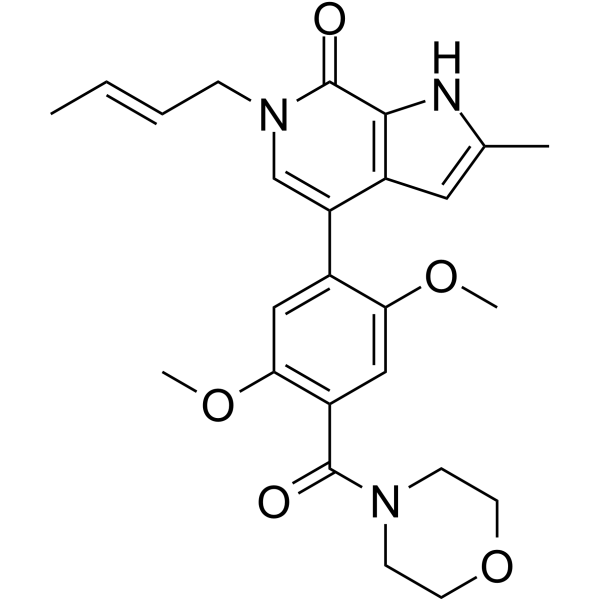 0 ImagesGNE-375 is a potent and highly selective BRD9 inhibitor with an IC50 of 5 nM. GNE-375 shows >100-fold selective for BRD9 over BRD4, TAF1, and CECR2. GNE-375 decreases BRD9 binding to chromatin.
-
Naphthol AS-MX phosphate
 0 ImagesNaphthol AS-MX phosphate (NASTRp) is a small molecule inhibitor of the CREB (cyclic adenosine phosphate reaction element binding protein)-CBP (CREB binding protein) transcription factor complex. Naphthol AS-MX phosphate shows antitumor activity against lung cancer cells, inhibiting tumor cell proliferation (IC50=3.701 μmol/L), colony formation, and anchored independent growth in soft AGAR. Naphthol AS-MX phosphate can be used in the study of KRAS mutated lung cancer, especially for KRAS mutated lung cancer with poor chemotherapy resistance and prognosis.
-
BRD4 Inhibitor-20
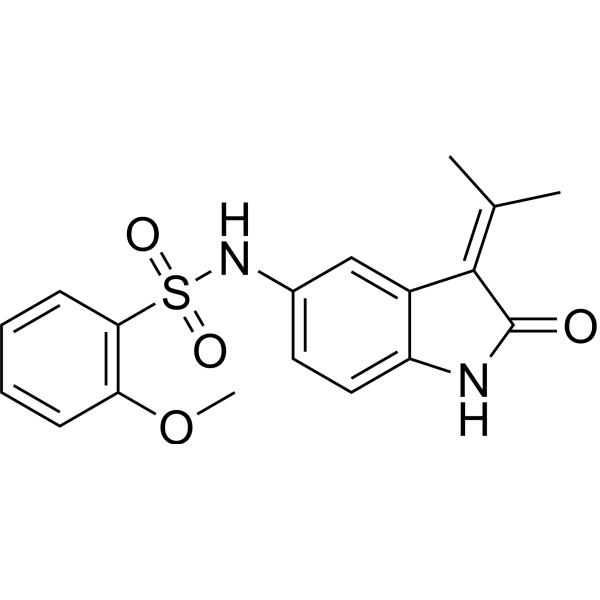 0 ImagesBRD4 Inhibitor-20 is a potent orally active bromodomain protein 4 (BRD4) inhibitor. BRD4 Inhibitor-20 has inhibitory activity for BRD4 (BD1) and BRD4 (BD2) with IC50 values of 19 nM and 28 nM, respectively. BRD4 Inhibitor-20 also has anti-proliferation activities in cancer cell lines. BRD4 Inhibitor-20 can be used for the research of kinds of cancer, such as colon cancer.
-
M-1211
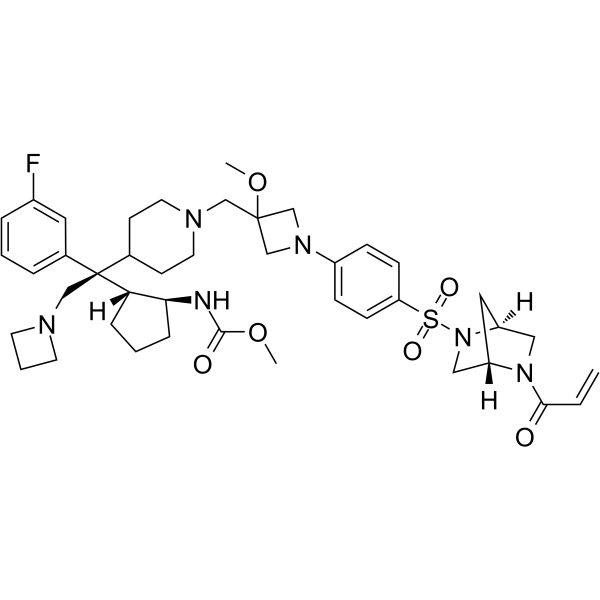 0 ImagesM‑1121 is a covalent and orally active inhibitor of the menin-MLL interaction capable of achieving complete and persistent tumor regression.
-
BETd-246
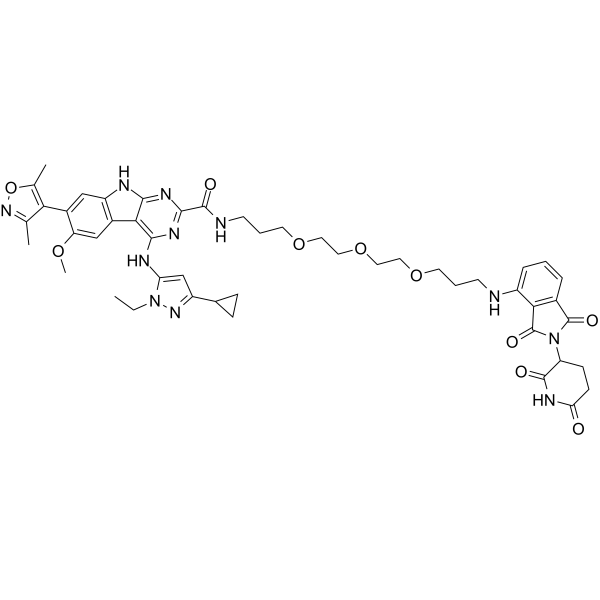 0 ImagesBETd-246 is a BRD2/3/4 PROTAC degrader targeting the BET family. BETd-246 induces ubiquitination and proteasomal degradation of BRD2, BRD3 and BRD4 by recruiting the CUL4-RBX1-DDB1-CRBN E3 ubiquitin ligase complex; it also inhibits TRAT1 expression and depletes BET proteins. BETd-246 suppresses cancer cell proliferation and invasion, disrupts the cell cycle and induces apoptosis. BETd-246 is applicable to research related to triple-negative breast cancer and T-cell acute lymphoblastic leukemia.
-
M-808
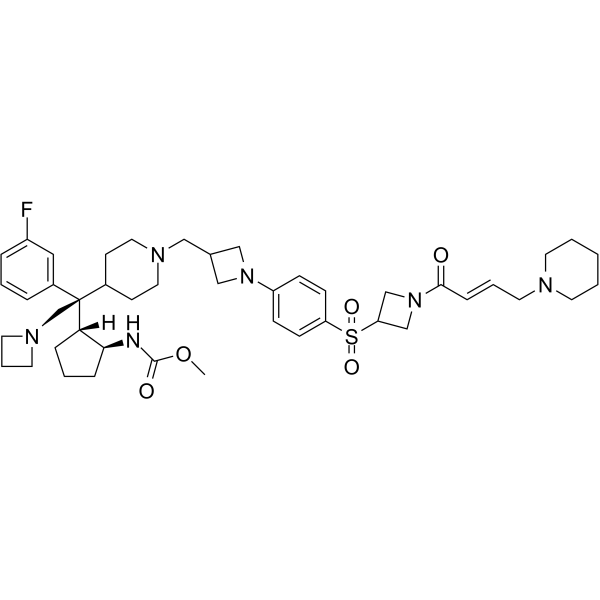 0 ImagesM-808 is a highly potent and efficacious covalent Menin-MLL interaction inhibitor, with a binding IC50 value of 2.6 nM.
-
BRD4/CK2-IN-1
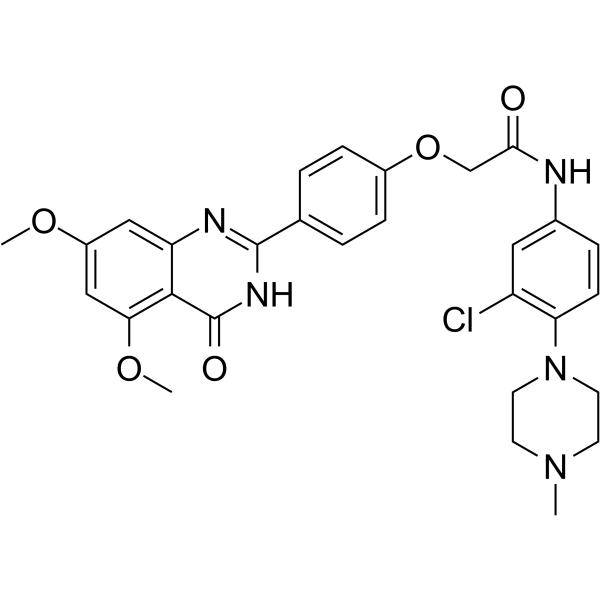 0 ImagesBRD4/CK2-IN-1 is the first highly effective and oral active dual-target inhibitor of BRD4/CK2 (bromodomain-containing protein 4/casein kinase 2), with IC50s of 180 nM and 230 nM for BRD4 and CK2, respectively. BRD4/CK2-IN-1 has strong anticancer activity without obvious toxicities. BRD4/CK2-IN-1 induces apoptosis and autophagy-associated cell death in triple-negative breast cancer (TNBC)